
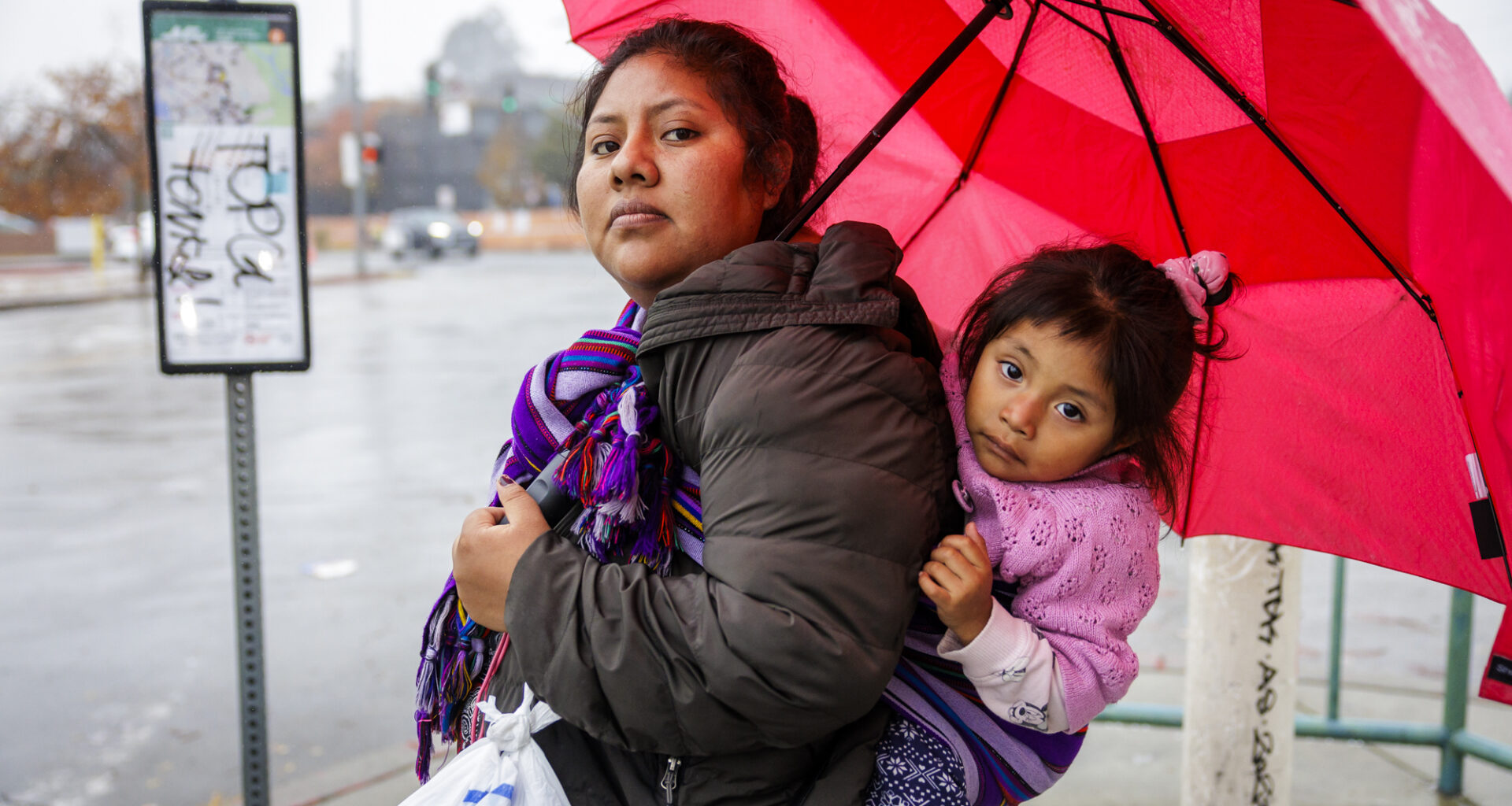
“There is a willingness to access it, but there are too many accessibility issues and the discount does not overcome those,” Syed said.
On Dec. 10, Syed introduced an agenda planning request to the AC Transit Board of Directors, asking the board to consider taking up the issue of fare policy reform at a future meeting. The required number of three board members endorsed the request. Syed expects the board to take up the issue again in February or March 2026.
Low-income riders and residents of historically marginalized communities, like deep East Oakland, face numerous barriers in using Clipper, according to Laurel Paget-Seekins, the senior transportation policy advocate at Public Advocates, a nonprofit civil rights and economic justice law firm.
“The system doesn’t work for people who are low income and unbanked and live in neighborhoods that don’t have access to reload their card,” she said.
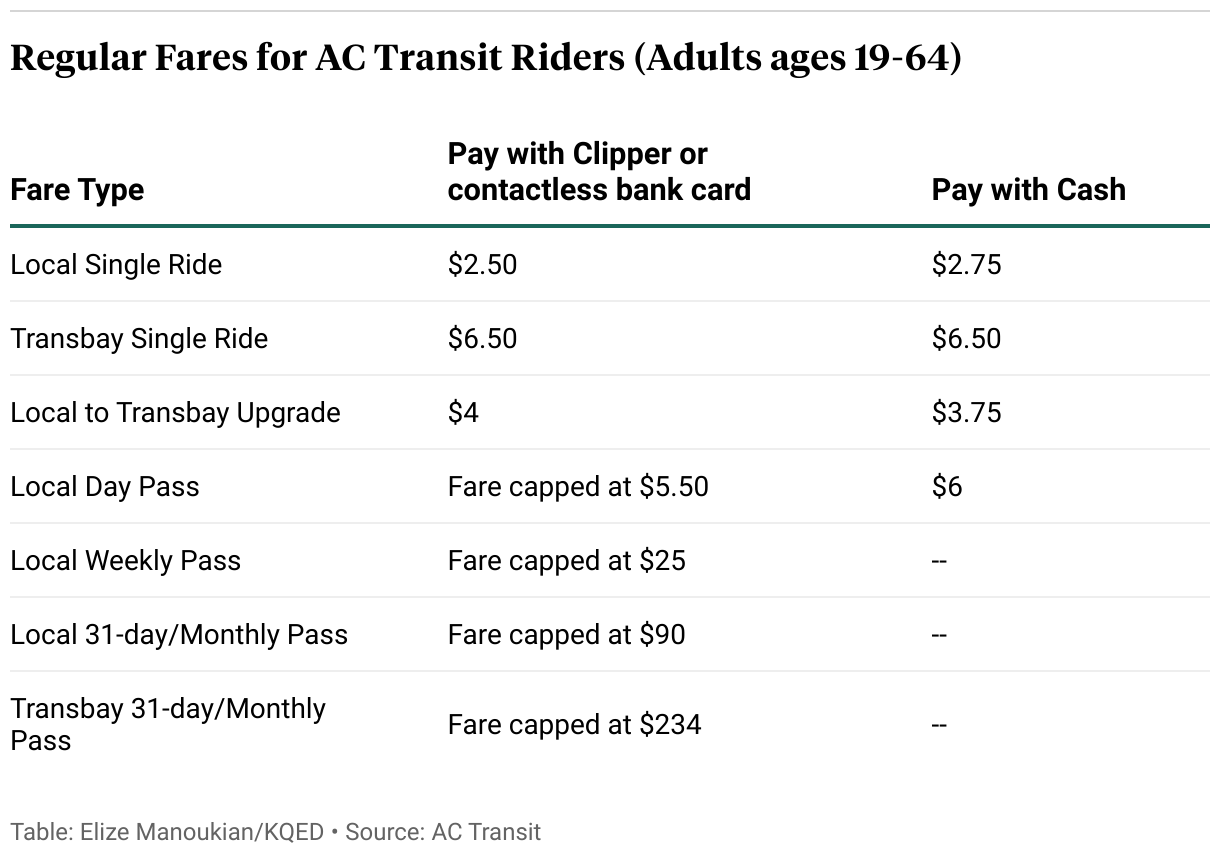
Paget-Seekins said numerous areas in AC Transit’s service area, including the Eastmont Transit Center, lack access to Clipper reload stations. The system can also be cumbersome for people living paycheck to paycheck, as Clipper requires people to pre-load money onto their cards, and the system’s automatic reload feature requires a minimum of $20, Paget Seekins said.
Public Advocates is calling on AC Transit’s Board to equalize cash and Clipper fares, and to create a way for people who use cash to purchase a $25 weekly pass, mimicking the $25 weekly fare cap that exists for Clipper and contactless bank card riders.
Adding more Clipper reload stations would require action by the MTC.
“We at the MTC believe the discounts available for Clipper customers – very much including Clipper START – encourage Clipper use; and that the free and discounted transfers now available with the next generation Clipper system will further encourage use of Clipper on both traditional plastic cards and mobile Clipper cards,” said John Goodwin, MTC assistant director of communications, in an emailed statement to KQED.
Goodwin responded to transit advocates calling some parts of Alameda County “Clipper reload deserts” – saying “they may be somewhat less arid given the high penetration of smart phones among households throughout the Bay Area.”
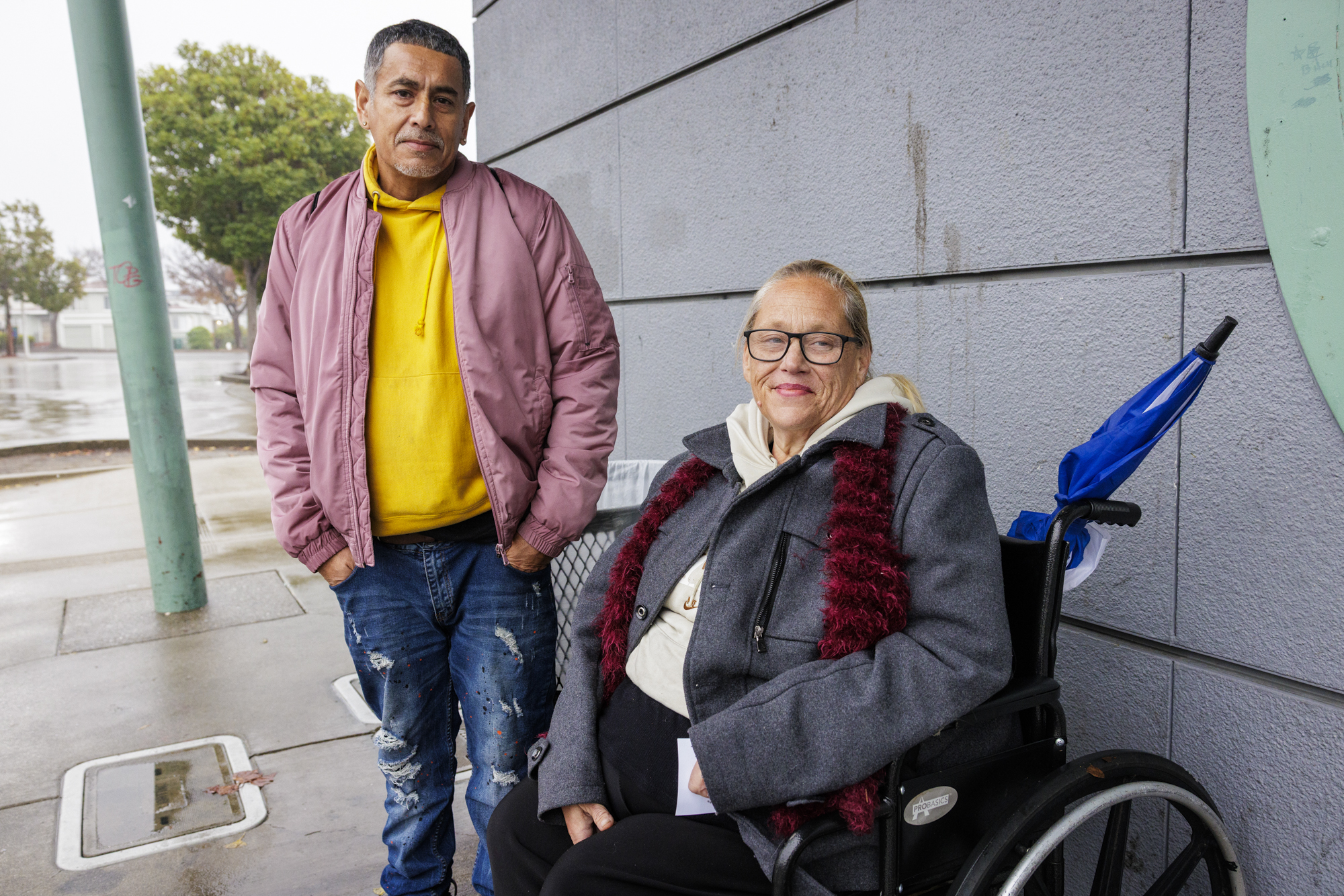 Rene Harrison and Jenine Garcia wait for their bus at the Eastmont Transit Center in Oakland on Dec. 17, 2025.
Goodwin cited the 2024 American Community Survey from the U.S. Census Bureau, which estimates 95% of Alameda County residents have a smartphone.
Staying out of the rain under a bus shelter at Eastmont Transit Center, Jenine Garcia, sitting in her wheelchair, waited for the 40 bus with her boyfriend, Rene Harrison. Garcia said they have been living in homeless shelters for a couple years, and were on their way to the Bay Fair BART station to find a bank to cash a check.
Garcia said she has a Clipper card loaded on her phone, but it ran out of battery, so for this ride she planned to pay a full cash fare.
“I started using Clipper because I felt it was more convenient, but it isn’t when your phone dies,” she said.
Even if her phone was charged, she said she wouldn’t be able to use Clipper until she got to a bank, put money on her debit card and then loaded the card online.
“It’s not fair at all,” Garcia said.